


The Tastemakers: British Dealers and the Anglo-Gallic Interior, 1785-1865
Diana Davis
In this volume, Diana Davis demonstrates how London dealers invented a new and visually splendid decorative style that combined the contrasting tastes of two nations. Departing from the conventional narrative that depicts dealers as purveyors of antiquarianism, Davis repositions them as innovators who were key to transforming old art objects from ancien régime France into cherished “antiques” and, equally, as creators of new and modified French-inspired furniture, bronze work, and porcelain. The resulting old, new, and reconfigured objects merged aristocratic French eighteenth-century taste with nineteenth-century British preference, and they were prized by collectors, who displayed them side by side in palatial interiors of the period.
The Tastemakers analyzes dealer-made furnishings from the nineteenth-century patron’s perspective and in the context of the interiors for which they were created, contending that early dealers deliberately formulated a new aesthetic with its own objects, language, and value. Davis examines a wide variety of documents to piece together the shadowy world of these dealers, who emerge center stage as traders, makers, and tastemakers.
Diana Davis specializes in the interface between collectors, dealers, and the art market in the late eighteenth and early nineteenth centuries.
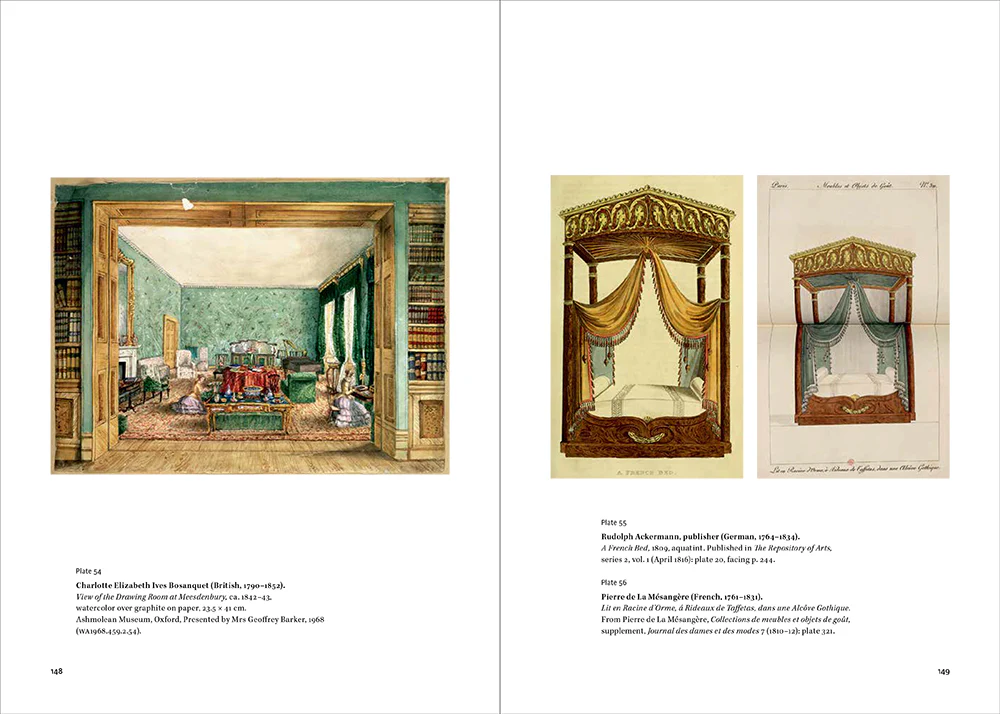
“No book on art history would be complete without visual illustrations accompanying the text. Davis lives up to the reader’s expectations by providing stunning plates on glossy paper between parts one and two of the book.”
—Sucheta Kapoor, Nineteenth-Century French Studies
“Davis’s recovery of the Anglo-Gallic as a distinct and complex style is an impressive and important achievement, and the book is filled with details and observations that one hopes will inspire future researchers to delve more deeply into the interpretative questions that it makes possible.”
—Pamela Fletcher, Victorian Studies
“Lavishly illustrated, impeccably researched, and beautifully written . . . Davis’s book makes a pioneering contribution to the history of collecting.”
—Jeremy Howard, Journal of British Studies
“A detailed and convincing explanation of the networks of trade that influenced the creation of both a distinctive hybrid style of collecting and some of the most spectacular domestic interiors of the age.”
—Rufus Bird, The Burlington Magazine
“Clearly composed in a jargon-free yet scholarly style, The Tastemakers is a fine book that will do much to broaden the historical understanding of and appreciation for a much-maligned decorative style in the established literature of British interior design history.”
—Conor Lucey, H-France Review
“In a handsome hardback from the Getty Research Institute, Diana Davis charts the ways dealers—those 'pawnbrokers' . . . brought French style to the English interior.”
—Benjamin Riley, The New Criterion
“Brilliantly original. . . . A landmark book, beautifully written and executed, which challenges and redefines our ideas of both French and English taste.”
—Tom Stammers, Apollo
“Clear and concise . . . presents a thought-provoking discussion, underscored by extremely detailed archival research. . . . The book makes a significant contribution to the study of nineteenth-century dealers, and on the specificity of the role of French ancien régime furniture and objects in British interiors in the opening decades of the nineteenth century.”
—Furniture History Society
“Beautifully presented and lavishly illustrated. . . . Wide-ranging in in scope. . . . The text is well written and especially strong in the acutely detailed primary research on the furniture and objects that populated the interiors. . . . It will be a well-thumbed publication and rightly draws new attention to what has remained, until now, a significant lacuna.”
—Journal of the History of Collections
"A must-read for anyone who studies the histories of decorative art retail and production, interior design, collecting and display, or familial and business networks in the early nineteenth century."
—Anca I. Lasc, Journal of Design History
“Art historian Diana Davis makes the case that, after the French Revolution, antique dealers in Britain reinvented the furniture and objects of the ancien régime for a new market. ‘Acting as makers, retailers, and decorators,’ she explains, ‘dealers created a sumptuous new decorative style.’ Modern notions of authenticity had yet to emerge; 18th-century French originals could coexist happily with 19th-century British imitations. The enterprising dealers who made or sourced these pieces were curating interiors in which ‘Frenchness was as much an imagined reality as a material one’.”
—House & Garden
“As much a book about people as about art. Departing from the conventional narrative of art dealers as purveyors of antiquarianism, independent scholar Diana Davis has repositioned them as influencers who invented a visually splendid decorative style that combined the contrasting tastes of their own nation (Britain) and of France. They did this by transforming old objects from pre-revolutionary France into cherished “antiques” while also creating new (and modified) French-inspired furniture, bronzework, and porcelain. This surprising 320-page book is available from Getty Publications.”
—Cherie Dawn Hass, Fine Art Connoisseur
“As the comprehensive ‘Sources and Bibliography’ at the back of the volume demonstrates, this meticulous study draws together many strands investigated by scholars over recent decades, while adding much significant and original research.”
—Martin Levy, Decorative Arts Society Newsletter
“Written by academic and furniture historian Diana Davis, it provides a wonderfully lucid account of the demand for French luxury goods, including furniture and fabrics, that spawned an international trade to which dealers in London- English and emigres- responded. . . . Highly suggested reading.”
—Chappell & McCullar
320 pages
7 x 10 inches
60 color and 64 b/w illustrations
ISBN 978-1-60606-641-6
hardcover
Getty Publications
Imprint: Getty Research Institute
2020
Original: $65.00
-65%$65.00
$22.75Product Information
Product Information
Shipping & Returns
Shipping & Returns
Description
Diana Davis
In this volume, Diana Davis demonstrates how London dealers invented a new and visually splendid decorative style that combined the contrasting tastes of two nations. Departing from the conventional narrative that depicts dealers as purveyors of antiquarianism, Davis repositions them as innovators who were key to transforming old art objects from ancien régime France into cherished “antiques” and, equally, as creators of new and modified French-inspired furniture, bronze work, and porcelain. The resulting old, new, and reconfigured objects merged aristocratic French eighteenth-century taste with nineteenth-century British preference, and they were prized by collectors, who displayed them side by side in palatial interiors of the period.
The Tastemakers analyzes dealer-made furnishings from the nineteenth-century patron’s perspective and in the context of the interiors for which they were created, contending that early dealers deliberately formulated a new aesthetic with its own objects, language, and value. Davis examines a wide variety of documents to piece together the shadowy world of these dealers, who emerge center stage as traders, makers, and tastemakers.
Diana Davis specializes in the interface between collectors, dealers, and the art market in the late eighteenth and early nineteenth centuries.
“No book on art history would be complete without visual illustrations accompanying the text. Davis lives up to the reader’s expectations by providing stunning plates on glossy paper between parts one and two of the book.”
—Sucheta Kapoor, Nineteenth-Century French Studies
“Davis’s recovery of the Anglo-Gallic as a distinct and complex style is an impressive and important achievement, and the book is filled with details and observations that one hopes will inspire future researchers to delve more deeply into the interpretative questions that it makes possible.”
—Pamela Fletcher, Victorian Studies
“Lavishly illustrated, impeccably researched, and beautifully written . . . Davis’s book makes a pioneering contribution to the history of collecting.”
—Jeremy Howard, Journal of British Studies
“A detailed and convincing explanation of the networks of trade that influenced the creation of both a distinctive hybrid style of collecting and some of the most spectacular domestic interiors of the age.”
—Rufus Bird, The Burlington Magazine
“Clearly composed in a jargon-free yet scholarly style, The Tastemakers is a fine book that will do much to broaden the historical understanding of and appreciation for a much-maligned decorative style in the established literature of British interior design history.”
—Conor Lucey, H-France Review
“In a handsome hardback from the Getty Research Institute, Diana Davis charts the ways dealers—those 'pawnbrokers' . . . brought French style to the English interior.”
—Benjamin Riley, The New Criterion
“Brilliantly original. . . . A landmark book, beautifully written and executed, which challenges and redefines our ideas of both French and English taste.”
—Tom Stammers, Apollo
“Clear and concise . . . presents a thought-provoking discussion, underscored by extremely detailed archival research. . . . The book makes a significant contribution to the study of nineteenth-century dealers, and on the specificity of the role of French ancien régime furniture and objects in British interiors in the opening decades of the nineteenth century.”
—Furniture History Society
“Beautifully presented and lavishly illustrated. . . . Wide-ranging in in scope. . . . The text is well written and especially strong in the acutely detailed primary research on the furniture and objects that populated the interiors. . . . It will be a well-thumbed publication and rightly draws new attention to what has remained, until now, a significant lacuna.”
—Journal of the History of Collections
"A must-read for anyone who studies the histories of decorative art retail and production, interior design, collecting and display, or familial and business networks in the early nineteenth century."
—Anca I. Lasc, Journal of Design History
“Art historian Diana Davis makes the case that, after the French Revolution, antique dealers in Britain reinvented the furniture and objects of the ancien régime for a new market. ‘Acting as makers, retailers, and decorators,’ she explains, ‘dealers created a sumptuous new decorative style.’ Modern notions of authenticity had yet to emerge; 18th-century French originals could coexist happily with 19th-century British imitations. The enterprising dealers who made or sourced these pieces were curating interiors in which ‘Frenchness was as much an imagined reality as a material one’.”
—House & Garden
“As much a book about people as about art. Departing from the conventional narrative of art dealers as purveyors of antiquarianism, independent scholar Diana Davis has repositioned them as influencers who invented a visually splendid decorative style that combined the contrasting tastes of their own nation (Britain) and of France. They did this by transforming old objects from pre-revolutionary France into cherished “antiques” while also creating new (and modified) French-inspired furniture, bronzework, and porcelain. This surprising 320-page book is available from Getty Publications.”
—Cherie Dawn Hass, Fine Art Connoisseur
“As the comprehensive ‘Sources and Bibliography’ at the back of the volume demonstrates, this meticulous study draws together many strands investigated by scholars over recent decades, while adding much significant and original research.”
—Martin Levy, Decorative Arts Society Newsletter
“Written by academic and furniture historian Diana Davis, it provides a wonderfully lucid account of the demand for French luxury goods, including furniture and fabrics, that spawned an international trade to which dealers in London- English and emigres- responded. . . . Highly suggested reading.”
—Chappell & McCullar
320 pages
7 x 10 inches
60 color and 64 b/w illustrations
ISBN 978-1-60606-641-6
hardcover
Getty Publications
Imprint: Getty Research Institute
2020