376 pages
7 1/2 x 10 1/2 inches
19 color and 19 b/w illustrations
17 line drawings
ISBN 978-1-60606-059-9
hardcover
Getty Publications
Imprint: Getty Research Institute
2011
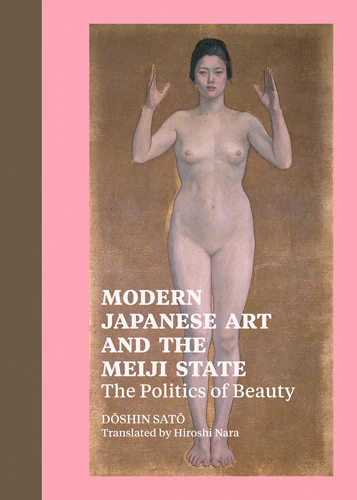
Modern Japanese Art and the Meiji State: The Politics of Beauty
Dōshin Satō
Translated by Hiroshi Nara
This broad-ranging and profoundly influential analysis describes how Western art institutions and vocabulary were transplanted to Japan in the late nineteenth century. In the 1870s and 1880s, artists, government administrators, and others in Japan encountered the Western "system of the arts" for the first time, as objects and information from Japan reached European and American audiences following the collapse of the shogun's regime. Under pressure to exhibit and sell its artistic products abroad, Japans new Meiji government came face-to-face with the need to create European-style art schools, museums, government-sponsored exhibitions, and artifact preservation policies―and even to establish Japanese words for "art," "painting," "artist," and "sculpture."
Modern Japanese Art and the Meiji State represents nothing less than a reconceptualization of the field of Japanese art history. It exposes the politics through which the words, categories, and values that still structure our understanding of the field came to be while revealing the historicity of Western and non-Western art history.
Dōshin Satō is professor of Japanese art history at the Tokyo University of the Arts. The original Japanese edition of this book, published in 1999, was the winner of the Suntory Prize for Social Sciences and Humanities.
376 pages
7 1/2 x 10 1/2 inches
19 color and 19 b/w illustrations
17 line drawings
ISBN 978-1-60606-059-9
hardcover
Getty Publications
Imprint: Getty Research Institute
2011
Original: $75.00
-65%$75.00
$26.25Product Information
Product Information
Shipping & Returns
Shipping & Returns
Description
Dōshin Satō
Translated by Hiroshi Nara
This broad-ranging and profoundly influential analysis describes how Western art institutions and vocabulary were transplanted to Japan in the late nineteenth century. In the 1870s and 1880s, artists, government administrators, and others in Japan encountered the Western "system of the arts" for the first time, as objects and information from Japan reached European and American audiences following the collapse of the shogun's regime. Under pressure to exhibit and sell its artistic products abroad, Japans new Meiji government came face-to-face with the need to create European-style art schools, museums, government-sponsored exhibitions, and artifact preservation policies―and even to establish Japanese words for "art," "painting," "artist," and "sculpture."
Modern Japanese Art and the Meiji State represents nothing less than a reconceptualization of the field of Japanese art history. It exposes the politics through which the words, categories, and values that still structure our understanding of the field came to be while revealing the historicity of Western and non-Western art history.
Dōshin Satō is professor of Japanese art history at the Tokyo University of the Arts. The original Japanese edition of this book, published in 1999, was the winner of the Suntory Prize for Social Sciences and Humanities.
376 pages
7 1/2 x 10 1/2 inches
19 color and 19 b/w illustrations
17 line drawings
ISBN 978-1-60606-059-9
hardcover
Getty Publications
Imprint: Getty Research Institute
2011