



Exiled in L.A.: The Untold Story of Leopold Fischer's Domestic Architecture
Volker M. Welter
The first English-language volume to explore the work of architect Leopold Fischer, and the inaugural study of his California legacy.
In 1936, Leopold Fischer (1901–1975), in exile from Nazi Germany, arrived in California, where he created a small but distinct oeuvre of mostly domestic architecture. In contrast to his famous peers Rudolph Schindler and Richard Neutra, immigrants whose Southern California buildings are frequently examined—and who, like Fischer, studied with the modernist architect Adolf Loos—Fischer and his California structures have, until now, escaped the attention of architectural history.
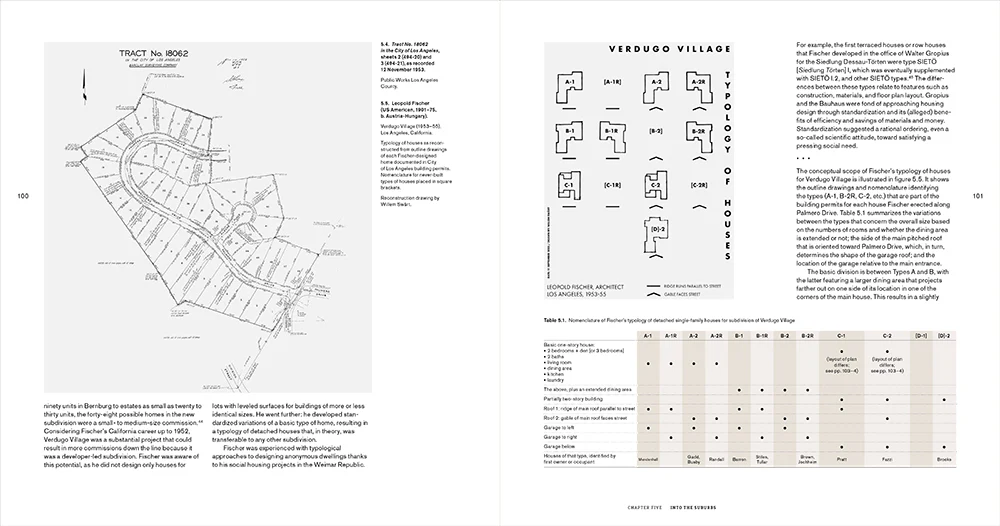
Exiled in L.A. examines Fischer’s important, yet overlooked, contributions to Southern California architecture. As the whereabouts of Fischer’s archives remain unknown, Volker M. Welter grounds the designer’s California works in comparison with his pre-exile projects and the compositions of fellow architects in California. In the 1920s, Fischer created experimental working-class housing estates in Germany that pioneered ecological construction and living practices. Comparable to their predecessors, Fischer's California buildings revolve around the “functioning, the organization of a home,” as he defined domestic architecture in 1926. Featuring new photography and detailed architectural plans, this book is an original contribution to the literature on Southern California’s built heritage.
Volker M. Welter is a professor in the Department of History of Art and Architecture at the University of California, Santa Barbara. He is the author of Tremaine Houses: One Family’s Patronage of Domestic Architecture in Midcentury America (Getty, 2019).
“Welter’s work documenting Fischer’s built, planned, destroyed, and even rumored projects is a critical addition to the documentary record of modernist architecture in Southern California.”
—Michele Jennings, ARLIS/NA
“A student of Adolf Loos and a friend of Arnold Schoenberg, Leopold Fischer was one of the exile architects who came to California in the 1930s but who has long since slipped into undeserved obscurity. In contrast to the standard histories of mid-twentieth-century California architecture, Volker M. Welter here explores the difference between the émigré and the immigrant architect to expose a referential as opposed to deliberately innovative architecture.”
—Neil Jackson, author of California Modern: The Architecture of Craig Ellwood and Pierre Koenig: A View from the Archive
“Volker M. Welter is one of the most esteemed experts on avant-garde architecture and artists in exile. His newest book meticulously reconstructs the work of a long-forgotten Austrian architect, Leopold Fischer. Fischer attended the school of Adolf Loos, worked with Walter Gropius in Dessau, and fled to the United States in 1936. Through in-depth source studies of numerous American and European archives, Welter recreates the exemplary networks of architects in exile. These ‘detailed’ representations are the foundation for a new, realistic historiography of modernism.”
—Dr. Matthias Boeckl, Professor, Institute of Architecture, University of Applied Arts Vienna
“In this stimulating study, Volker M. Welter examines the work of émigré architect Leopold Fischer, who mainly built private houses and whose writings and drawings are considered to be lost. Welter’s analysis opens our eyes to a previously overlooked and important chapter in California’s modern architecture history.”
—Dr. Burcu Dogramaci, Professor of Art History, Institut für Kunstgeschichte, Ludwig-Maximilians-Universität München
168 pages
9 1/2 x 10 inches
42 color and 68 b/w illustrations, 7 tables
ISBN 978-1-60606-986-8
hardcover
Getty Publications
Imprint: Getty Research Institute
2025
Original: $45.00
-65%$45.00
$15.75Product Information
Product Information
Shipping & Returns
Shipping & Returns
Description
Volker M. Welter
The first English-language volume to explore the work of architect Leopold Fischer, and the inaugural study of his California legacy.
In 1936, Leopold Fischer (1901–1975), in exile from Nazi Germany, arrived in California, where he created a small but distinct oeuvre of mostly domestic architecture. In contrast to his famous peers Rudolph Schindler and Richard Neutra, immigrants whose Southern California buildings are frequently examined—and who, like Fischer, studied with the modernist architect Adolf Loos—Fischer and his California structures have, until now, escaped the attention of architectural history.
Exiled in L.A. examines Fischer’s important, yet overlooked, contributions to Southern California architecture. As the whereabouts of Fischer’s archives remain unknown, Volker M. Welter grounds the designer’s California works in comparison with his pre-exile projects and the compositions of fellow architects in California. In the 1920s, Fischer created experimental working-class housing estates in Germany that pioneered ecological construction and living practices. Comparable to their predecessors, Fischer's California buildings revolve around the “functioning, the organization of a home,” as he defined domestic architecture in 1926. Featuring new photography and detailed architectural plans, this book is an original contribution to the literature on Southern California’s built heritage.
Volker M. Welter is a professor in the Department of History of Art and Architecture at the University of California, Santa Barbara. He is the author of Tremaine Houses: One Family’s Patronage of Domestic Architecture in Midcentury America (Getty, 2019).
“Welter’s work documenting Fischer’s built, planned, destroyed, and even rumored projects is a critical addition to the documentary record of modernist architecture in Southern California.”
—Michele Jennings, ARLIS/NA
“A student of Adolf Loos and a friend of Arnold Schoenberg, Leopold Fischer was one of the exile architects who came to California in the 1930s but who has long since slipped into undeserved obscurity. In contrast to the standard histories of mid-twentieth-century California architecture, Volker M. Welter here explores the difference between the émigré and the immigrant architect to expose a referential as opposed to deliberately innovative architecture.”
—Neil Jackson, author of California Modern: The Architecture of Craig Ellwood and Pierre Koenig: A View from the Archive
“Volker M. Welter is one of the most esteemed experts on avant-garde architecture and artists in exile. His newest book meticulously reconstructs the work of a long-forgotten Austrian architect, Leopold Fischer. Fischer attended the school of Adolf Loos, worked with Walter Gropius in Dessau, and fled to the United States in 1936. Through in-depth source studies of numerous American and European archives, Welter recreates the exemplary networks of architects in exile. These ‘detailed’ representations are the foundation for a new, realistic historiography of modernism.”
—Dr. Matthias Boeckl, Professor, Institute of Architecture, University of Applied Arts Vienna
“In this stimulating study, Volker M. Welter examines the work of émigré architect Leopold Fischer, who mainly built private houses and whose writings and drawings are considered to be lost. Welter’s analysis opens our eyes to a previously overlooked and important chapter in California’s modern architecture history.”
—Dr. Burcu Dogramaci, Professor of Art History, Institut für Kunstgeschichte, Ludwig-Maximilians-Universität München
168 pages
9 1/2 x 10 inches
42 color and 68 b/w illustrations, 7 tables
ISBN 978-1-60606-986-8
hardcover
Getty Publications
Imprint: Getty Research Institute
2025